



News

[Back]

Implementing JMAG

Shibaura Institute of Technology Kan Akatsu M&E Energy Conversion Lab.
Tackling Next Generation Motor Development using JMAG

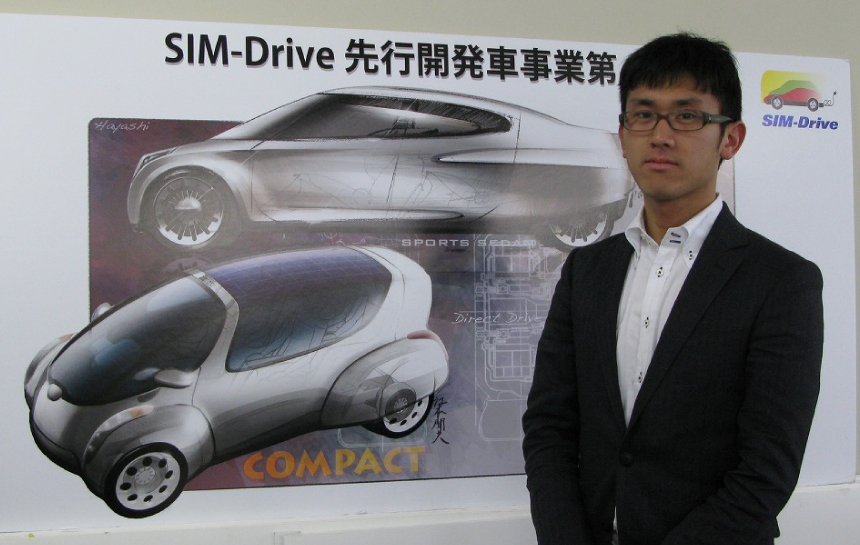
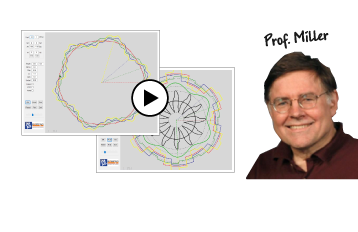
The evolution of technology for motors and control systems has been tremendous. The progress of development is driven around an environmental axis which has provided motors that can cut the world's power consumption in half and brought us electric vehicles. Electromagnetic field analysis software is becoming a tool indispensable in designing and evaluating the performance of these types of products. Prof. Akatsu uses the electromagnetic field analysis software, "JMAG," for his M&E Energy Conservation Lab. at Shibaura Institute of Technology which is known for its achievements reducing torque ripple in permanent magnet motors and he is an executive member of several technical committees in The Institute of Electrical Engineers of Japan. In this interview, Prof. Akatsu discusses motor development and electromagnetic field analysis software.

Associate Professor Kan Akatsu
Department of Electrical Engineering Shibaura Institute of Technology

- It seems interest in motor and control systems is growing as hybrid vehicles that combine engines and electric motors are becoming the standard while electric vehicles approach commercial viability.

Prof. Akatsu   Motors are thought of as a very mature technology, but their technological innovation continues today. Currently, motor and control systems continue to advance, especially to address environmental issues. Although this statistic is not very well known, 57% of the power in Japan is consumed by electric motors. This includes all of the motors built into compressors, pumps, and various other equipment. Motors that have power usage efficiency of less than 30%, or "power wasting motors" make up more than a hand full of the motors that are used. Motors controlled by inverters are said to have a usage efficiency of roughly 16% to 17%.
It is estimated that the world's C02 emissions could be reduced by 7% if motors just in Japan were replaced by the most efficient products in the market today.
This means that highly efficient, small, low cost, and high performance motor systems need to be adopted around the world when considering the environmental burden.
Interest in electric vehicles is growing and the technological progress of motor systems, which is at the heart of these vehicles, is advancing rapidly. For example, motors for automobiles require high torque at low speeds, such as when starting a car on a hill. However, motors only capable of producing large torque would be too powerful and pointless under normal driving conditions. Additionally, because these motors need to be installed inside the vehicle, small yet powerful motors are desired.
These challenges drive a new type of research in motor electronics that needs to unify the development of the materials and structure of motors with the development of the control.


- Among the increasing demands of today, you use the leading edge magnetic field analysis software "JMAG" for your research.

Prof. Akatsu   JMAG is used as a design tool as well as a tool to examine our theories. As an example, we investigate the effects of nonlinear characteristics using simulation after creating a linear design. We also examine whether the theories we are considering for a new motor are actually valid, which relates to the numerical models we create JMAG is also used to create control models by deriving the control parameters of the motor.
Linear models are no longer used in the design of control systems. Therefore, results from magnetic field and circuit simulations using JMAG-RT are implemented in real-time control simulations.
JMAG is a vital tool that is taught to the students working in my lab. The students address specific production challenges of motors, which deepens their understanding as they attempt the inductance calculations*1, iron loss calculations*2, and output curve calculations*3 used in the manufacturing process.

*1 Inductance = A property caused by variations of current becoming induced electromotive force in coils, etc. Inductance is also referred to as induction coefficient.
*2 Iron loss calculation = The amount of electric energy lost when current is applied to the core of a motor wound with coil and magnetized. The efficiency of motors worsens as iron loss increases.
*3 Output curve calculation = Variations of output (power) for motors


Contents

 1. Implement JMAG   2. Introducing JMAG-Designer Ver.10.4
 3. JMAG Application Catalog
   158 - Superimposed Direct Current Characteristic Analysis of a Reactor Accounting for the Minor Hysteresis Loop
   159 - Influence Analysis of Dimensional Tolerance using Morphing
 4. Exhibition Report
   - JMAG Users Conference 2010 Report -
   - JMAG USER CONFERENCE 2011-


Contact US


Free Trial
JMAG-RT Motor Model Library

Application Catalog

Video