An engineer's diary
- Sort condition
- Newest first
- Oldest first
- Large number of views
-
[No. 13] Winding diagram for an AC motor
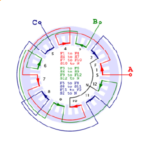
Here we see a winding diagram for a 3-phase AC induction motor or brushless PM motor (IPM), having 4 poles and 36 slots. This winding could in fact be used with any AC machine, i…
-
[No. 15] Reading a winding diagram
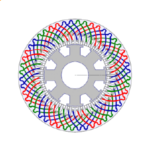
Winding diagrams come in many different formats. There is no universal standard, but several common conventions can be found in the winding diagrams used by different manufacturin…
-
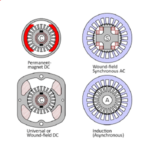
[No. 17] Classification of electric machines
The diagram shows most of the electric machines in common use, together with the two reluctance machines which are rare but interesting. Classification is much more than an acade…
-
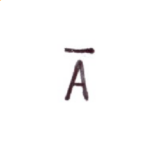
[No. 39] The magnetic vector potential
A is commonly used as the symbol for magnetic vector potential, just as B is used for flux-density or "induction", and H for mag…
-
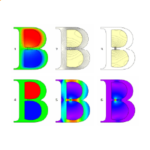
[No. 40] Flux density
The six images are listed below in the wrong order. Please, before you read this, try to decide what the Bees are showing. The answer is given at the end.
-
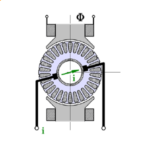
[No. 21] What is a space-vector?
A space-vector — let us say, a space-vector of current — is a single complex number representing the combined effect of all three phase currents in an AC machine at a particular i…
-
[No. 16] Four rules of saliency
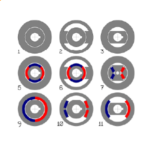
We often hear the terms "salient-pole" or "non-salient-pole" in relation to electric machines."Saliency" is the idea of "projecting beyond the general outline", and it refers to t…
-
[No. 34] Some essential features of the synchronous reluctance motor
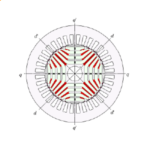
In Column 31 we deduced several inherent features of the switched reluctance motor merely by inspecting its cross-section and considering the main flux-paths, and here we will do …
-
[No. 36] Some essential features of the induction motor – 1
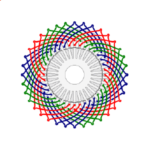
In Column 34 we deduced several inherent features of the synchronous reluctance motor merely by inspecting its cross-section and considering the main flux-paths, and here we will …
-
[No. 24] Synchronous torques in induction motors
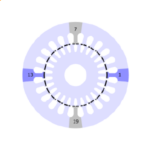
Fig. 1 shows two types of irregularity in the speed/torque characteristic of an induction motor — the asynchronous torque dip and the synchronous torque dip. These are sometimes c…
-
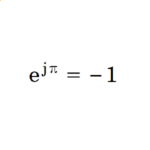
[No. 43] Exponential function and complex numbers in electrical engineering
Euler [1707-1783] is closely associated with this equation which has been described as the most beautiful equation in mathematics. It is sometimes regarded as having mystical sign…
-
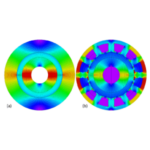
[No. 46] Harmonic poles
The number of poles is perhaps the most basic parameter in the design of an electric machine. When we speak of this parameter, we usually mean the number of working poles. Fig. 1 …
-
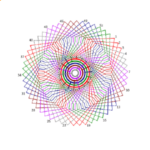
[No. 30] Rotational EMF
In electrical machine theory we often hear the term rotational EMF. What exactly does it mean?“EMF” means “electro-motive force”. In electrical machine theory it is a voltage indu…
-
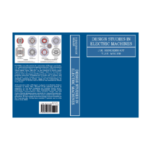
[No. 52] JMAG goes to work
This new book is written for engineers concerned with the design and development of electric machines.
-
[No. 49] Hair-pin winding
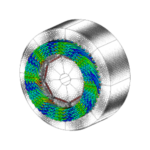
The hair-pin winding has become prominent in drive-train motors for electric and hybrid vehicles, with many creative examples in manufacturing. Although ‘push-through’ hair-pin co…
-
[No. 42] Diameter
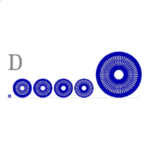
D is for diameter! — surely the most fundamental of all engineering dimensions, at least in electric machine design. It is so important, we might ask ourselves why computer monito…
PROFILE
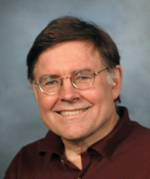
Prof. Miller was educated at the universities of Glasgow and Leeds, U.K., and served an industrial apprenticeship with Tube Investments Ltd. He worked for G.E.C. in the U.K. and General Electric in the United States. From 1986-2011 he was professor of electric power engineering at the university of Glasgow, where he founded the Scottish Power Electronics and Electric Drives Consortium. He has published more than 200 papers and 10 books and 10 patents, and he has given many training courses. He has consulted for several industrial companies in Europe, Japan and the United States. He is a Life Fellow of I.E.E.E. and in 2008 he was awarded the Nikola Tesla award.
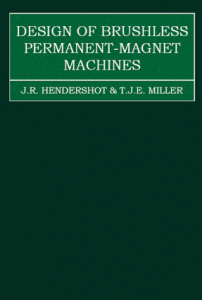
The Green Book: “Design of Brushless Permanent-Magnet Machines”
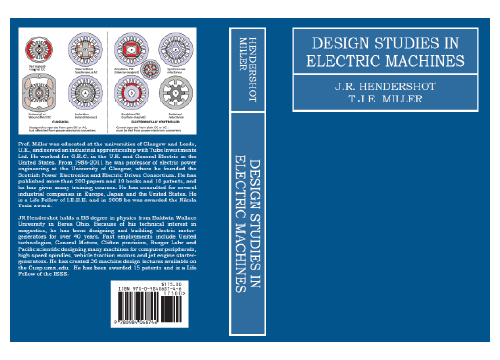
The Blue Book: “Design Studies in Electric Machines” (June 30, 2022)