JMAG Users Conference
Japan 2026

December 9 - 10 |
Hamamatsucho Convention Hall (Tokyo, Japan)

Greeting

Hello, this is the Users Conference secretariat.

JSOL Corporation would like the Users Conference each year to be an opportunity for users to communicate and share ideas.
A wealth of content will be provided to satisfy a range of skill levels including JMAG wizards and beginners, as well as those who have not yet participated in the Users Conference.

These presentations will be immensely helpful for those who are yet to have a long history of JMAG under their belts, as well as for those who will be looking to use JMAG in the foreseeable future. Discussions will touch on hurdles that users may encounter in their initial introductions to JMAG, which will also be accompanied by a number of analysis case studies.

For those who have not yet joined us, those who could not participate in the previous year, those who have not attended for several years, and those who join us every year - we welcome all of you.

We look forward to seeing new and familiar faces!

Organizer

Organizer JSOL Corporation
Dates December 9 and 10, 2026
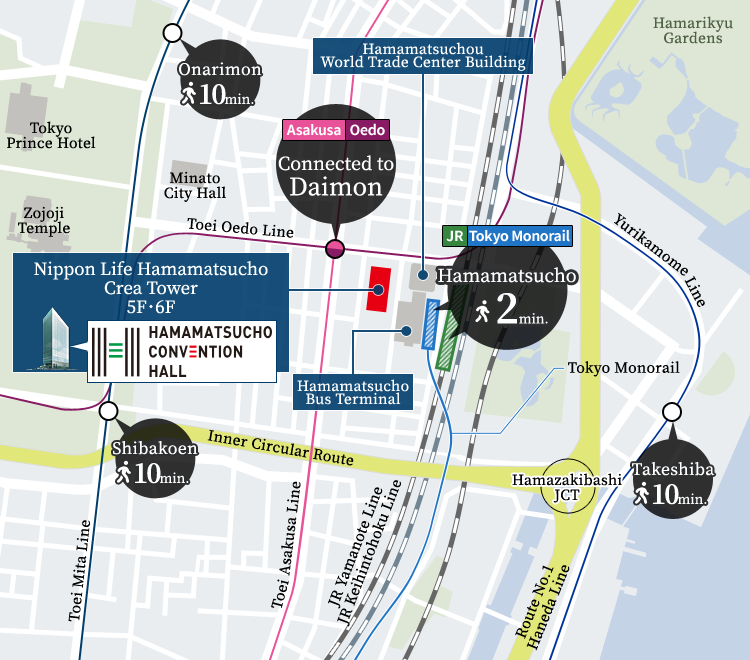
Venue Hamamatsucho Convention Hall
5-6F, 2-chōme-3-1 Hamamatsuchō, Minato City, Tōkyō-to 105-0013, Japan
* Simultaneously interpreted in Japanese and English
Expected number of participants Approximately 700
Registration Fees JMAG Users: Free
General Admission: ¥50,000 (without tax)

Registration

The deadline for applications to participate in the JMAG Users Conference 2026 has stopped.
We wish to thank all of those who applied.
A wealth of content will be provided to satisfy a range of skill levels including JMAG wizards and beginners, as well as those who have not yet participated in the Users Conference.
We provide simultaneous interpretation between Japanese and English.
We look forward to your participation.

Keynote Speech
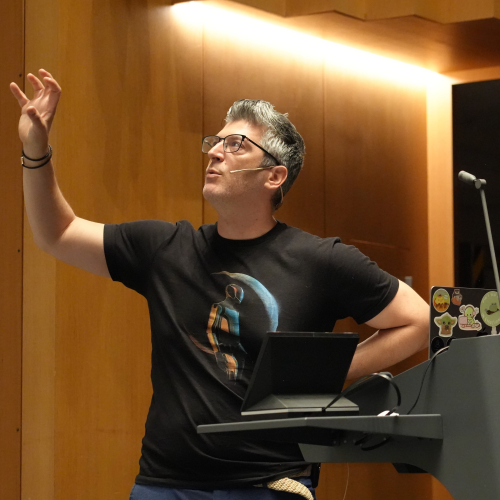
Tesla, Inc.
Lead of Optimums Engineering at Tesla, Optimus engineering, Humanoid Robot
Dr. Konstantinos Laskaris
Maxwell Stress to Muscle: Motor drive systems to Optimus

Physics-based modeling and system-level optimization are foundational to Tesla’s engineering approach. From EV powertrains to Optimus actuators, designs begin with physics and integrate electromagnetic, thermal, structural, and other system considerations into a unified optimization framework.

For Optimus, these methods extend from individual actuators to the robot as a complete system. Mission and task requirements inform the actuation strategy and hardware architecture, with motors, inverters, and gearing optimized together to deliver the required performance efficiently.

This systems-level approach enables Optimus to be designed around what the robot needs to accomplish, rather than around individual components. The goal is a highly capable, efficient, and scalable actuation system that minimizes unnecessary hardware and complexity.

Robotics, Data-DrivenLanguage: ENInterpretation: JA

Presenter

The Next Generation of Rotor Design: Topology Optimization Meets Air-Pocket Design | Mr. Daniel Romanowski, Daimler Truck AGLarge-Scale Optimization

Conventional, parametric design approaches limit the solution space to predefined geometric parameters. Topology optimization expands this space through the free distribution of material within a design domain, enabling more capable designs. Since this requires significantly more designs to be calculated, a larger number of licenses (PSL vs standard) is needed to reach an optimal result within a reasonable optimization timeframe.

In the application scenario "Air Pocket Optimization," the optimal distribution of air pockets within the rotor is investigated with the magnet in a fixed position. The model setup, objective functions, and boundary conditions are presented, along with an evaluation based on a reduced-order model using version 24.2.

Finally, the topology-optimized design is compared with the parametric reference design based on key KPIs. The conclusion and outlook focus on the combined optimization of air pockets and magnet position.

ダイキン工業株式会社 宮里 航司 氏 | 製造ばらつきによるモータ性能への影響の調査生産技術

モータの性能は、各部品の寸法公差や組付けばらつきなど、製造上生じる種々のばらつきの影響を受ける。これらの影響を設計段階で定量的に把握できれば、事前の対策検討や影響要因の特定が可能となり、開発における手戻りの低減につながる。
本検討では、モータの製造上想定されるばらつきを考慮した解析モデルを構築し、多数のばらつき条件に対する解析データを収集・分析した。得られたデータから、製造ばらつきによって生じる特徴的なばらつきモードを抽出し、各ばらつきモードとモータ性能変動との関係性を特定できる可能性について検討した。その解析手法および検討結果について報告する。

Motor Design for Human-Centric Robots – Balancing High Backdrivability and Instantaneous Torque – | Dr. Yoshihiro Okumatsu, TOYOTA MOTOR CORPORATIONRobotics

Recent advances in reinforcement learning and imitation learning are accelerating the deployment of robots that operate in close proximity to humans. Toyota has been developing a variety of robotic systems, including the basketball robot CUE and ELEY, a mobile manipulator capable of learning and reproducing human tasks through demonstration. To enable safe and agile operation in human environments, these robots require actuators that simultaneously achieve high backdrivability for compliant physical interaction and high instantaneous torque for human-like dynamic motion.
This presentation introduces our motor development efforts aimed at meeting these challenging requirements. Focusing on Halbach-array outer-rotor motors, we discuss design approaches for balancing competing objectives such as torque output, rotor inertia, cogging torque, and resistance to demagnetization. Practical design examples, prototype evaluation results, and lessons learned through electromagnetic analysis are presented. In addition, future directions for motor technologies supporting next-generation human-centric robots are discussed.

Optimization Study of a High-Frequency Transformer | Mr. Yohsuke Kinoshita, TOYOTA MOTOR CORPORATIONHigh-Frequency

In recent years, the practical adoption of next-generation power devices using SiC and GaN technologies has accelerated the increase of switching frequencies in power converters. This trend is expected to improve converter efficiency and reduce the size.
On the other hand, transformer design for power converters faces issues such as the impact of parasitic capacitance on EMI characteristics and design constraints due to miniaturization. Considering these factors during the design process often requires significant engineering effort.
This presentation introduces a design exploration case study that utilizes optimization techniques incorporating transformer parasitic capacitance, together with coupled electromagnetic, thermal, and structural analyses, to achieve an optimized transformer design.

Automated Design of High-Power Motors Considering Cooling and Demagnetization Using JMAG Optimization | Mr. Rihito Ogura, Nabtesco CorporationData-Driven Design

In electric motor development, with the growing risk of rare earth supply shortages, design risks related to the impact of demagnetization on performance are increasing. Meanwhile, conventional design processes are limited to “verifying the performance impact of switching to alternative magnets,” and optimizing designs using these alternatives requires significant effort.
This presentation will introduce a case study demonstrating how to perform optimization calculations for magnet shapes based on the characteristics of each magnet grade by utilizing JMAG’s optimization and thermal analysis functions.
In addition, we defined how to use optimization functions during the concept and detail design phases as part of our efforts to standardize our motor design process. We will also present a case study on the development of an optimization design process.

Study on Electromagnetic Exciting Force Generation in Induction Motor Using FEM Analysis with JMAG | Dr. Tsuyoshi Miyaji, AISIN CORPORATION*****

株式会社IHI 仲沢 龍翔 氏 | 適応型オンライン学習プロセスを導入した電動化製品向けモデルベース開発の高速化事例Data-Driven Design

IHIでは、複数の技術領域を統合したモデルベース開発(MBD)を活用し、システム全体のトレードオフを考慮した製品設計の最適化を検討してきた。しかし、一部の技術領域では、設計精度を確保するために有限要素解析(FEA)などの高忠実度解析が不可欠であり、その計算負荷が1Dモデルと連携した概念設計段階における最適化のボトルネックとなっている。
そこで本講演では、電動化システムにおけるモータ設計を対象に、JMAGによるFEA結果を逐次学習するサロゲートモデル(SUR)を導入し,FEAとSURの評価配分を適応的に切り替える最適化プロセスを提案する。本プロセスを適用することで、設計解品質を維持しつつ計算時間を短縮できることを確認した。本講演では、その適用事例と有効性について報告する。

株式会社アイシン・デジタルエンジニアリング 麻生 大貴 氏 | モータコア誘導加熱解析精度向上に向けたモデル化手法の検討生産技術

モータコアの誘導加熱解析は、加熱条件やコイル設計の事前検討に有効な手段として期待されている。一方、従来手法では温度実測結果との傾向差が生じる場合があり、活用に向けて解析精度の向上が課題であった。本講演では、解析精度向上を目的としてモデル化方法を見直し、磁場・温度の実測結果との比較を通じてその有効性を検証する。さらに、得られた知見をもとに今後の解析活用方針を整理する。

Automated Calculation of N-T Characteristics Using JMAG-Express and Scripts | Mr. Tamon Yamada, DENSO CORPORATIONData-Driven Design

N-T characteristics are a critical design benchmark in motor development. However, the design process typically relies on engineers in charge of designing the magnetic circuit to not only run the magnetic field analyses but also organize and post-process the analysis results to obtain the N-T characteristics. To simplify this process, we configured an environment using JMAG scripts that automates N-T characteristic calculations. Our environment takes advantage of JMAG-Express rather than JMAG-Designer as well to enable even those new to JMAG to specify the condition settings and run evaluations. The framework launches the JMAG scripts to automatically calculate the N-T characteristics when JMAG-Express loads the analysis results. One single workflow from running evaluations to calculating the N-T characteristics minimizes the workload and makes calculations previously limited to engineers responsible for the magnetic design accessible to other designers and engineers. This case study provides an overview of the calculation environment, the configuration process, and specific use cases.

Optimization Analysis of an Axial Flux Motor and the Potential of Material Selection Applications | Mr. Kohei Aiba, Resonac CorporationOptimization

Axial flux motors offer high design flexibility due to their three-dimensional structure, making the application of optimization analysis challenging. This presentation introduces case studies of electromagnetic and optimization analyses for axial flux motor design. In addition, a material selection study using a newly available feature that treats materials as discrete variables is presented, and the potential of applying optimization analysis to material selection is discussed. Furthermore, examples of optimization studies that consider not only motor performance but also factors such as cost as objective functions are introduced.

Loss Analysis and Application to Optimal Design of DC-Biased Reactors Using the Play Model | Mr. Tetsuya Ogawa, Kobe Steel, Ltd.Materials Modeling

Iron loss properties of materials alone cannot precisely predict losses in DC-biased reactors because the DC magnetization distorts the hysteresis loop. This case study uses a play model to estimate the DC-biased B-H characteristics of our MH20D pure iron powder core material as well as run hysteresis loss analyses. These analysis results that closely match measurements prove the effectiveness of our approach for loss prediction in DC-biased reactors. This case study also took advantage of this analysis method to evaluate and optimize reactor designs capitalizing on the unique characteristics of pure iron powder magnetic cores. Our presentation will show some examples of the material selections and reactor designs used for these analyses as well.

Acceleration and Practical Implementation of Optimal Induction Motor Design Using Surrogate Models | Ms. Kako Yamahata, Toshiba CorporationSurrogate Model

In recent years, optimization has become important in induction motor design to improve efficiency and satisfy various design requirements. However, FEA-based optimization requires significant computation time, and the computation time increases rapidly as the number of design variables increases. In addition, nonlinear characteristics caused by magnetic saturation and leakage flux can reduce the prediction accuracy of surrogate models and make optimization results less reliable. This presentation presents an approach to accelerate the optimal design of induction motors by developing a surrogate model trained using historical design assets. It also presents methods for reducing prediction errors caused by nonlinear characteristics. The improvement in surrogate model accuracy and the effectiveness of the surrogate model in optimization is evaluated.

Electromagnetic Field Analysis and Applications of a Practical High-Temperature Superconducting Induction Motor Incorporating a Nonlinear Constitutive Equation Relating Electric Field and Current Density | Dr. Taketsune Nakamura, Kyoto UniversitySuperconductivity

We are engaged in the research and development of high-temperature superconducting induction motors featuring squirrel-cage rotor winding made of high-temperature superconductors. To date, we have demonstrated outstanding characteristics, including a peak efficiency exceeding 99.5% and rotational stability during rapid acceleration and deceleration. Furthermore, we are advancing multiple application development projects based on these fundamental research findings through industry-academia collaborations; for instance, our high-temperature superconducting submerged pump for liquid hydrogen has reached a practical level of viability.
  To facilitate the practical implementation of high-temperature superconducting induction motors, precise analysis and design technologies must be established. The characteristics of high-temperature superconductors are defined by a constitutive equation relating electric field and current density; therefore, it is essential to establish an analysis method that accurately incorporates this nonlinear equation.
  This presentation introduces electromagnetic field analysis results for a practical high-temperature superconducting induction motor, obtained using JMAG®-Designer while accounting for nonlinear electric field vs. current density characteristics. It also compares these analysis results with experimental data and discusses their quantitative accuracy. Finally, based on these findings, the presentation offers an outlook on the potential and future of high-temperature superconducting induction motors.

AC Loss Analysis of a Superconducting Coil for a Hydrogen-Liquefaction Magnetic Refrigeration System | Dr. Yoshiki Miyazaki, Railway Technical Research InstituteSuperconductivity

Stationary-type magnetic refrigeration systems for hydrogen liquefaction are attractive because they operate without moving components. However, the requirement to energize superconducting coils with alternating current results in AC losses that significantly affect the thermal load and overall system efficiency. This presentation reports the evaluation of AC losses in superconducting coils for a magnetic refrigerator using JMAG. The validity of the analysis methodology was verified through comparison with experimental coil results, and a conceptual study of coil models for a future-scale system is also presented.

Design and Experimental Validation of a 6,000 Nm-Class Magnetically Geared Motor | Mr. Tomoya Mifune, Mitsubishi Heavy Industries, Ltd.Virtual Prototyping

[TBA]

New Coupled Electromagnetic Field-Multi-Body Dynamics Analysis Method Using JMAG and RecurDyn | Ms. Ami Kuwada, MITSUBISHI ELECTRIC CORPORATIONVirtual Prototyping

The conventional method to analyze the operation of machines that leverage electromagnetic force uses JMAG to obtain the electromagnetic force of parts in specific orientations for import into RecurDyn multi-body dynamic analysis software. However, this approach cannot precisely capture variations in the electromagnetic force as the orientation of the parts changes, lowering the analysis accuracy. Our solution to maintain accuracy configures a coupled analysis that shares the electromagnetic force and part orientation between JMAG and RecurDyn through small time steps. This case study outlines that analysis method and demonstrates how it improves the analysis accuracy.

Numerical Analysis of Quench Transient Phenomena in Superconducting Coils | Mr. Yuta Ebara, Sumitomo Heavy Industries, Ltd.Superconductivity

In superconducting coils, accurate evaluation of transient phenomena such as current decay, heat generation, and temperature rise after a quench is important for coil protection and the design of operating conditions. In this study, the quench transient behavior of a superconducting coil was numerically analyzed using JMAG. An analysis model was developed to evaluate the temporal changes in coil current, dissipation of electromagnetic energy, heat generation, and temperature. The validity of the numerical approach was also examined through comparison with experimental results. In addition, as an extended study, a system including a magnetically coupled secondary coil was analyzed to investigate the influence of energy transfer on the transient response during a quench.

Minimum-Weight Design of a Concentrated-Winding SPMSM for Next-Generation Robots and Mobility Systems Based on Torque Requirements | Mr. Yoshiyasu Shibayama, Kawasaki Heavy Industries, Ltd.Robotics

Motor requirements for next-generation robots and mobility systems are first identified. A concentrated-winding SPMSM is then optimized for minimum weight under multiple combinations of continuous- and peak-torque requirements, considering electromagnetic, thermal, and demagnetization characteristics. The relationship between the torque requirements and the minimum achievable motor weight, together with the governing constraints, is clarified and summarized as a motor weight characteristic map for machine and motion design.

Offline Optimization of Synchronous Reluctance Motors Considering Uncertainty | Mr. Hayato Naojima, Fuji Electric Co., Ltd.Surrogate Model, Offline Optimization

Recently, demand for Synchronous Reluctance Motors (SynRMs) has been growing to achieve high efficiency and mitigate rare-earth price volatility and supply risks. Although parameter and topology optimization are widely applied to flux barrier shapes governing SynRM performance, the impact of manufacturing variations is often neglected. Conventional optimization considering variations requires repeated Finite Element Analysis (FEA) via Monte Carlo simulations, incurring prohibitive computational costs.
To overcome this challenge, we propose an offline optimization workflow that combines a Gaussian Process Regression surrogate model with Polynomial Chaos Expansion. Using SynRM design as a case study, this presentation reports an optimization that accounts for manufacturing variations while reducing computation time to less than 1/10 of the conventional Monte Carlo method.

Exhibitors

Nagaoka Motor Development Co., Ltd., width=230
MotorAI Inc. width=230
Motion System Tech. Inc. width=230
ARD Corporation width=230
FunctionBay, Inc. width=230
NIPPON KINZOKU CO.,LTD.
DSP Technology Co.,Ltd. width=230
Amazon Web Services Japan G.K.

* The product and service names contained herein are the trademarks or registered trademarks of their respective owners.

Exhibitors overview

Registration

The deadline for applications to participate in the JMAG Users Conference 2026 has stopped.
We wish to thank all of those who applied.
A wealth of content will be provided to satisfy a range of skill levels including JMAG wizards and beginners, as well as those who have not yet participated in the Users Conference.
We provide simultaneous interpretation between Japanese and English.
We look forward to your participation.

Contact

JMAG Business Company, JSOL Corporation
For inquiries, please click here.