
“Imagination Is More Important than Knowledge”
Development of Engineers with the Critical Thinking and Practical Skills to Contribute to Society
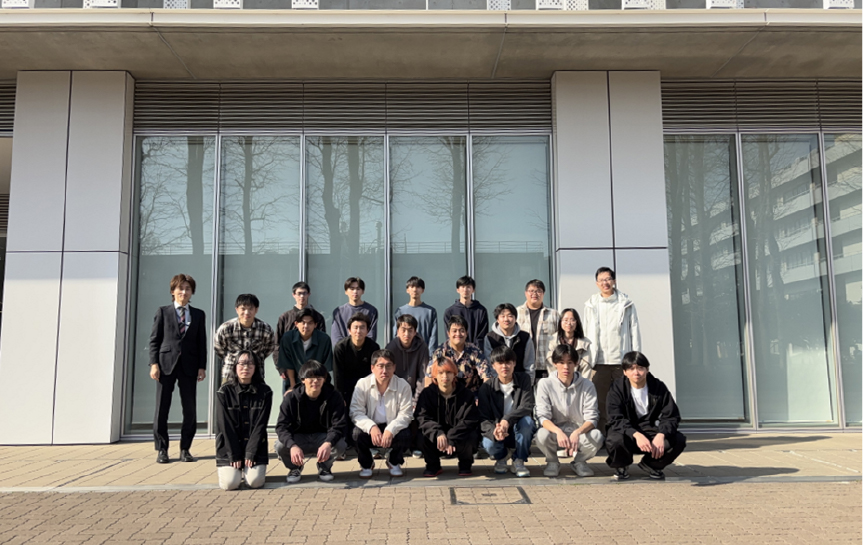
Dr. Hideki Ohguchi is passionate about sharing how important imagination is to critical thinking and communication in society, which are things he experienced first-hand training staff in the corporate world. We had the chance to ask Dr. Hideki Ohguchi about why debating and putting these values into practice in actual research is so important.
In March 2002, I received my Ph.D. in engineering from Tokyo Metropolitan University’s Graduate School of Engineering. I worked for Fuji Electric Co., Ltd. from April 2002 to March 2018 before joining the faculty at the Department of Electrical and Electronic Engineering at Tokai University’s School of Engineering. During my time at Fuji Electric Co., Ltd., I was involved in training the up-and-coming enginners. That is when I first started to think about ways to effectively train university students as well as new graduates assigned to research departments as professionals who can actively participate in industry.
I primarily focus on three research themes:
(1) Explore any potential room for improvement, even if small.
(2) Bridge the gap between simulation and prototyping.
(3) Fully consider why things happen.
In regards to my research philosophy:
Innovations to rotation machinery not only reduce the environmental burden but also help realize a carbon-neutral society.
In regards to my current research:
I am primarily focused on rotation machines and power electronics. Although my research mainly uses simulations, we are gradually doing more prototype testing.
As of April 2025, my research lab has two second-year and four first-year master’s students as well as fourteen bachelor students. In fact, four of my bachelor students are international students. The department where I work assigns third-year students to a laboratory of each teacher at the start of the fall semester. This means about ten new students join my research lab every autumn. In my seminar for these third-year students, I provide a seminar using Introduction to Permanent Magnet Synchronous Motors as the textbook. This course uses JMAG-Express Online as well. As a final assignment, I ask my students to design a permanent magnet synchronous motor that satisfies specific motor specifications that I’ve given them. We then review each student’s design using a value for the evaluation criteria that divides the efficiency by the volume. The surprising difference between their designs despite having the same specifications is truly fascinating. I hope my students feel the same while reviewing their designs.
Fourth-year students start their graduate research projects. One student or team of students focus on one specific research theme. Successful case studies go on to present the research results at the national conference held by The Institute of Electrical Engineers of Japan.
On the other hand, each master’s student must tackle their own individual research theme. These students work in one of the research labs provided to faculty of the Department of Electrical and Electronic Engineering. We assign each Master’s student their own space at these research labs. Two facility members share one practical testing lab where students can run various analyses and tests.
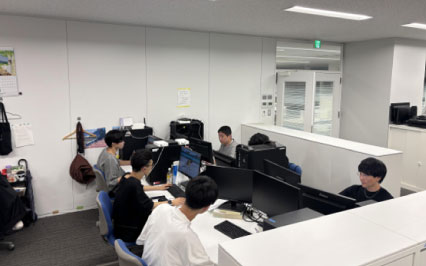 Master’s Students
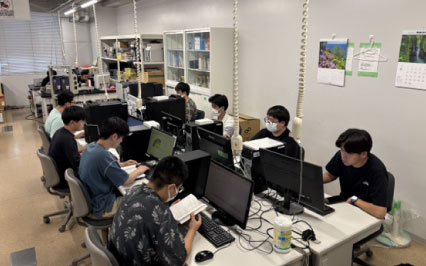 Practical Testing Lab
1: Higher Efficiency in Rotating Machines
This case study focused on researching stray losses. Engineers usually consider the stray losses in large machines during the design stage. However, this case study hypothesized that the effects of stray losses cannot be ignored in small and medium-sized machines either, depending on the specifications. The research is investigating the in-plane eddy-current loss of the core, eddy-current loss in the interlock, and the circulating current and eddy current losses in the wire to better understand the stray losses. The case study falls into my first research theme. This is a joint research project done with Fuji Electric.
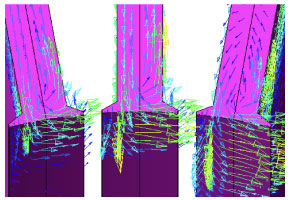 Fig. 1 Current Density Vectors Obtained by Analyzing the In-plane Eddy Current Loss of the Stator Core
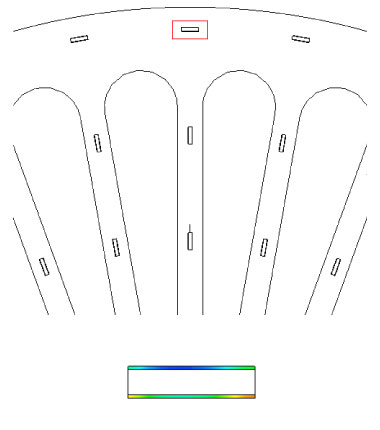 Fig. 2 Current Density Contour Plot Obtained by Analyzing the Eddy Currents Produced in the Interlock
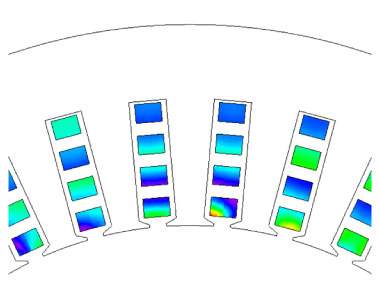 Fig. 3 Current Density Contour Plot Obtained by Analyzing the Circulating Current and Eddy Current Losses of the Coils
2: Higher Performance Robot Motors
Humans must be able to interact safely with robots for robots to coexist with humans, which requires better backdrivability. Lower cogging torque is one key to improving the backdrivability. In the past, students have used JMAG for optimizations to minimize cogging torque and maximize back EMF. We are currently working to lower the cogging torque through both analysis and prototyping. I provide some pictures of the analysis model, prototype, and cogging torque measurement system. Actual measurements obtain significantly higher cogging torque than the simulation. Going forward, this research will examine what is causing the large cogging torque in the prototype.
The case study falls into my second research theme. This is a joint research project done with Toyota Motor Corporation.
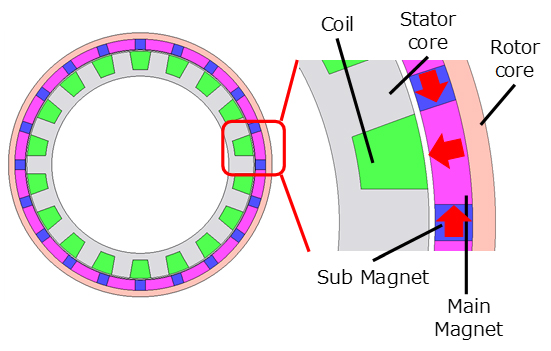 Fig. 4 Analysis Model of a Robot Motor
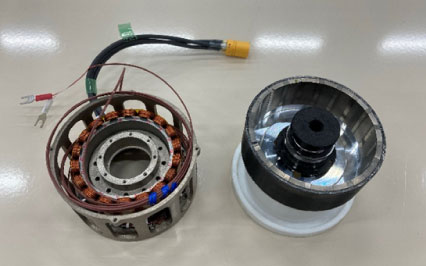
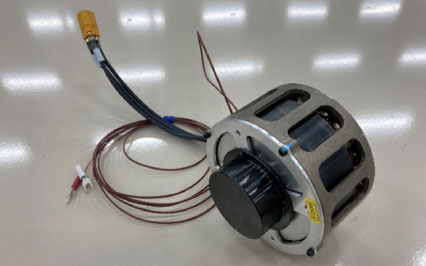
Robot Motor Prototype
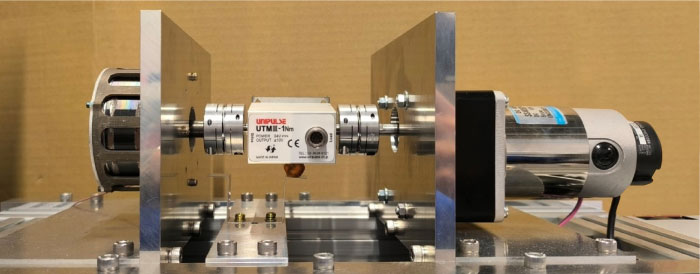 Cogging Torque Measurement System
3: Variable Field Synchronous Machine
Drive motors for electric vehicles require not only higher maximum speeds but also higher torque at low speeds. Motors can utilize a strong magnetic field to produce high torque at low speeds efficiently, but a strong magnetic field does decrease the maximum speed. However, a weak magnetic field can attain a higher maximum speed, but then the motor needs a large current to achieve high torque at low speeds, which lowers efficiency. That is why this research examines a hybrid variable field synchronous machine that combines permanent and electromagnets to vary the intensity of the magnetic field. While referencing a motor structure proposed by the Meidensha Corporation, the case study takes advantage of an IPM rotor and two layers of magnets to increase saliency.
The IEEJ Benchmark Model D is used as the base model. We ran loss analyses in JMAG to create and compare efficiency maps for Model D and the proposed motor. The results showed the proposed model struggled to attain higher efficiency at low speeds due to the field winding loss but provided superior operation without a field current at high speeds. This makes the proposed structure suitable for vehicles that primarily operate at high speeds. Although the case study has not yet examined the mechanical strength, we have verified that this structure can increase the maximum speed. The configuration should help improve the output density too. Another aspect of this research is our work to expand the range of the variable field.
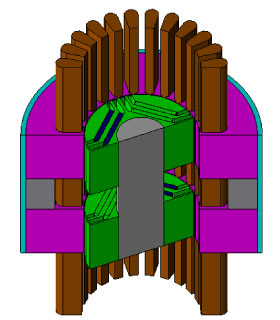 Fig. 5 Design Concept for a Variable Field Synchronous Machine
4: Hybrid Switched Reluctance Motor Using Permanent Magnets (HBSRM)
This case study is researching a hybrid switched reluctance motor that takes advantage of permanent magnets in the stator of a switched reluctance motor to realize a high torque density. We are using simulations and actual measurements to evaluate and compare the torque-current characteristics to further improve performance.
The case study falls into my second research theme. This is also a joint research project done with GENESIS Lab and Fuji Electric.
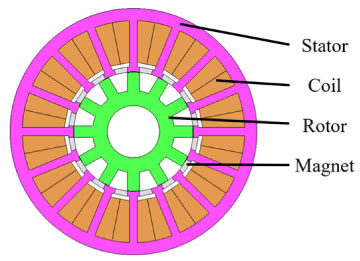 Fig. 6 Analysis Model
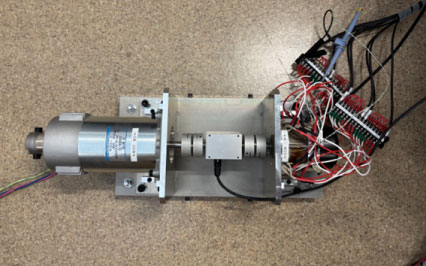 HBSRM Motor Test Bench
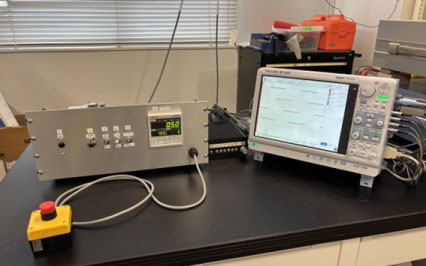 HBSRM Control Panel and Amplifier
I’m most focused on the research of rotating heat generators for thermal energy storage systems. This is a joint research project done with Fuji Electric and the Institute of Applied Energy. Thermal energy storage systems consist of an electrothermal converter to convert electric energy into thermal energy, a storage system to store that thermal energy, and a generator to convert the thermal energy into electric energy. Resistance heaters are a great example of an electrothermal converter. The application of rotating heat generators as electrothermal converters could provide greater capacity at a lower cost than resistance heaters. Rotating heat generators have heating elements that rotate, which means that any rotation machine could act as a rotating heat generator. Generally, the output of a rotating machine provides power to a shaft, but the output of a rotating heat generator takes advantage of losses to generate heat. That is why higher losses in a rotating heat generator means greater efficiency for this type of rotating machine.
Thermal energy produced by the rotor increases the temperature of the heat carrier passing through the air gap. The heat carrier not only flows in the axial direction but also the radial direction, even though the speed falls by about a factor of ten. Therefore, a rotating heat generator should provide a much more compact option than a resistance heater due to the significantly better heat transfer through the friction produced by the turbulent flow.
Induction machines could also offer the best characteristics as a rotating heat generator compared to several other types of rotating machines. That is why we are running analyses on various induction machines. This case study is endeavoring to drive the efficiency of rotating machines from a totally different standpoint. Thus far, we have analyzed and compared the losses of squirrel cage induction machines and solid cylinder and slotted rotors as well as verified the slip loss characteristics through simulations.
The next step is to fabricate and evaluate a prototype, which we plan to do in fiscal 2025.
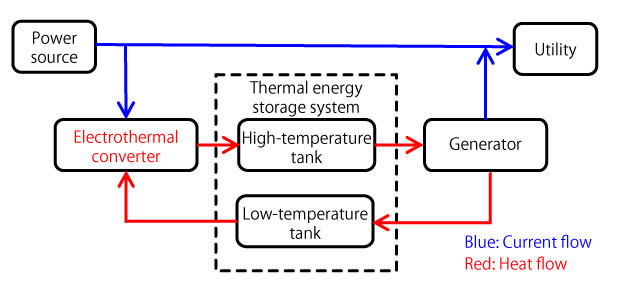 Fig. 7 Electro-thermal Energy Storage System
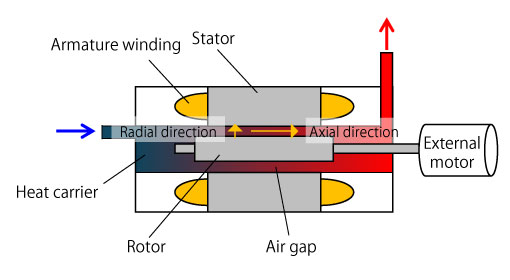 Fig. 8 Rotating Heat Generator
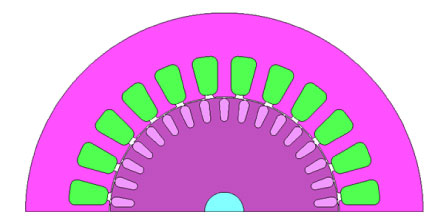
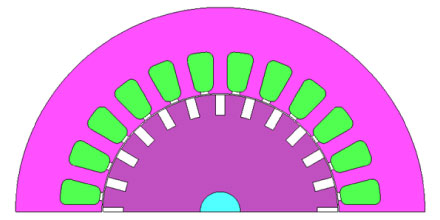
Fig. 9 Concept Machine Design
I always tell my students to initially try and figure things out themselves because it’s fine to fail. Especially when using simulations, you aren’t going to break anything. I want my students to try out things that they think might work, reconsider their approach based on the results, and then rinse and repeat this process. Some students obviously want me to just tell them the answer, even if they don’t ask in so many words. I always tell them that the goal of research is to discover answers that we don’t yet have.
Debate is a vital part of research as I said before about my career considering effective ways to train engineers newly assigned to research departments. I am careful not to let students simply do what I tell them to.
“Imagination is more important than knowledge.” I want everyone to engage in research by using their imagination. Our job is to go beyond preconceived notions. I don’t believe advancements are made by simply doing exactly what we are told to. Independent thought and action are vital.
However, we almost never work alone as professionals out in the working world. Critical thinking and putting good communication into practice help all of us grow.
My research lab runs three-dimensional analyses for several different types of case studies. Plan 3 provides a wealth of parallel processing options that address our needs to take full advantage of Windows desktop environments and parallel computing to efficiently run these three-dimensional analyses.
Moreover, we realized Plan 3 was the best option for us to run optimizations that can tackle two research themes at once. It turned out that the cost of a single Plan 3 license that provides 48 parallel processes made more sense than three Plan 1 licenses that provide 8 parallel process from a cost perspective if we happened to decide to add three additional licensees later on.
Of course, three Plan 1 licenses could be advantageous if it becomes necessary to reduce rather than add licenses because it wouldn’t be necessary to switch back to Plan 1 from Plan 3.
The academic licenses for JMAG are already extremely reasonable, but Plan 3 simply provides us even greater cost benefits.
Interviewee
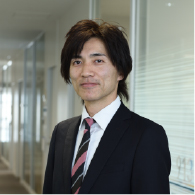
Dr. Hideki Ohguchi
Ohguchi Lab website:
https://ohguchi-lab.ei.u-tokai.ac.jp/

You need to sign in as a Regular JMAG Software User (paid user) or JMAG WEB MEMBER (free membership).
By registering as a JMAG WEB MEMBER, you can browse technical materials and other member-only contents for free.
If you are not registered, click the “Create an Account” button.
Create an Account Sign in