Overview
A coupled analysis is advantageous to precisely evaluate the temperature rise caused by the Joule losses of the secondary conductor and iron losses in the coil of the induction motor. This type of simulation obtains the temperature using thermal analyses that reference the losses obtained by magnetic field analyses. These simulations can evaluate the effect changes to the number of duct vents and layout have on the cooling through simple modifications of the parameters.
This case study optimizes the vent duct layout of an induction motor by taking into account the ventilation cooling to minimize the core volume and airflow from the cooling fan while satisfying the torque and temperature limits.
Optimization Conditions
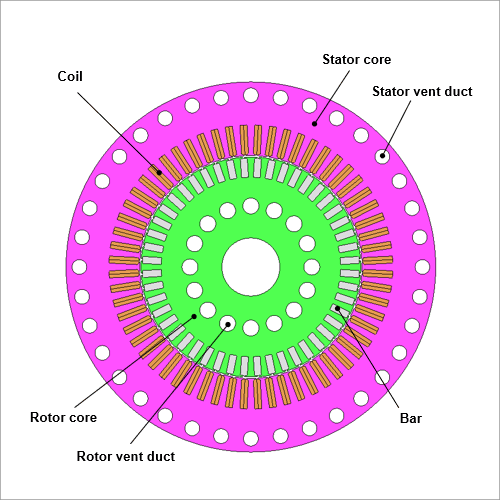
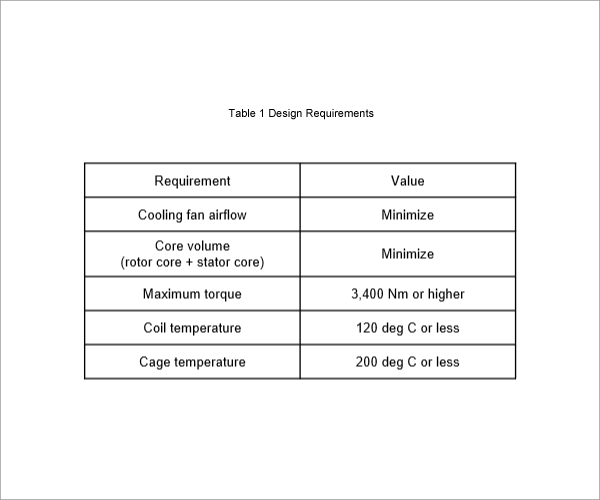
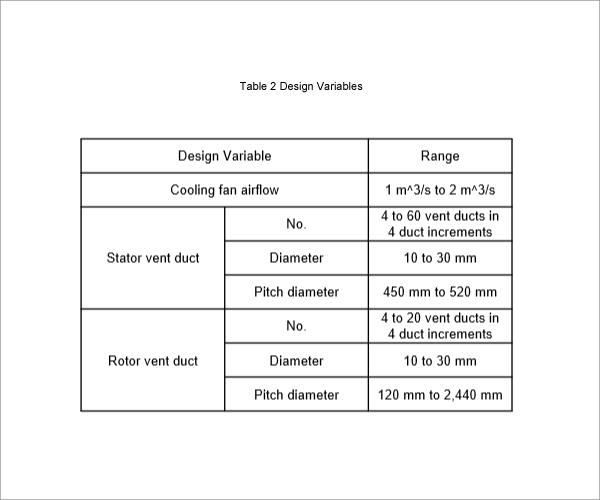
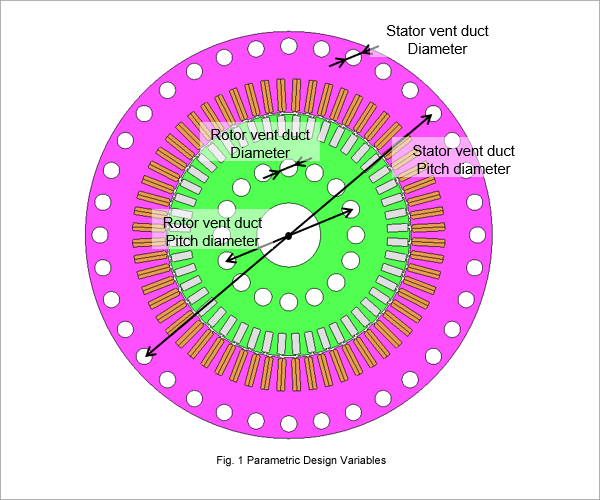
Table 1 outlines the design requirements. Table 2 and Fig. 1 outline the design variables and ranges.
Optimization Results
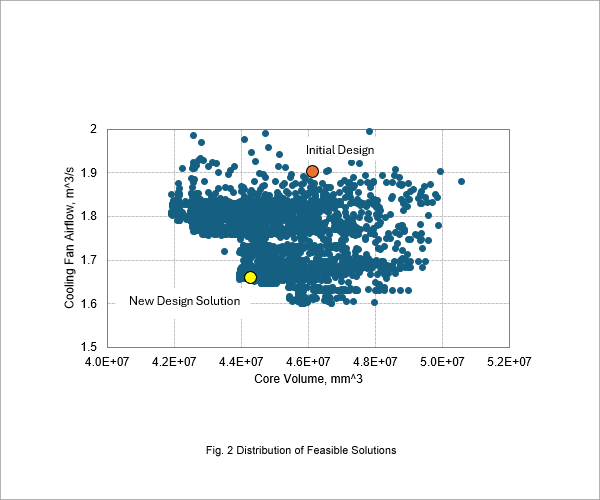
The optimization has obtained design solutions that reduce the cooling fan airflow and core volume compared to the initial design. The optimization results in Fig. 2 illustrates the initial design versus the new design solutions.
Design Comparison
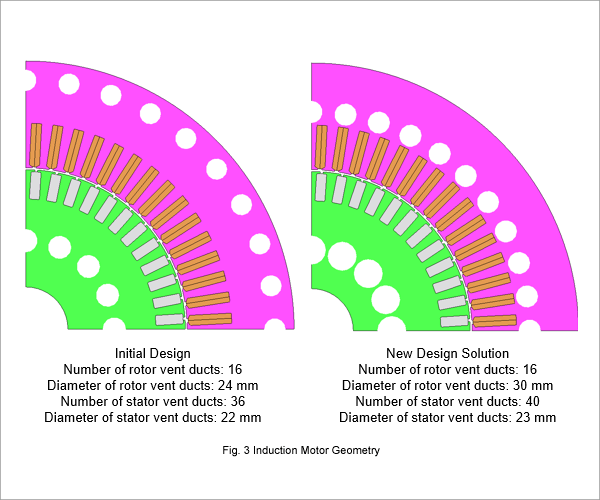
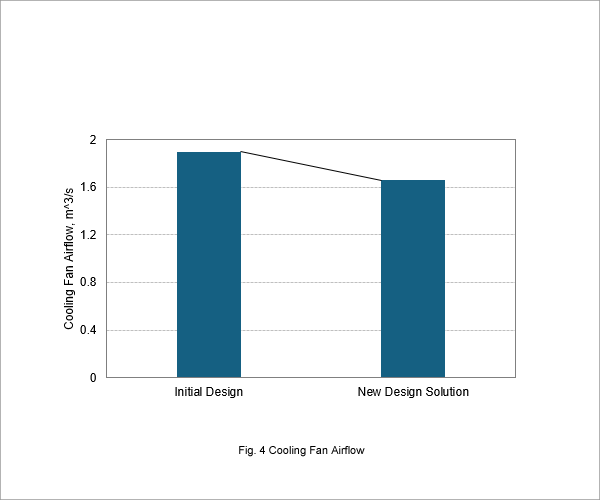
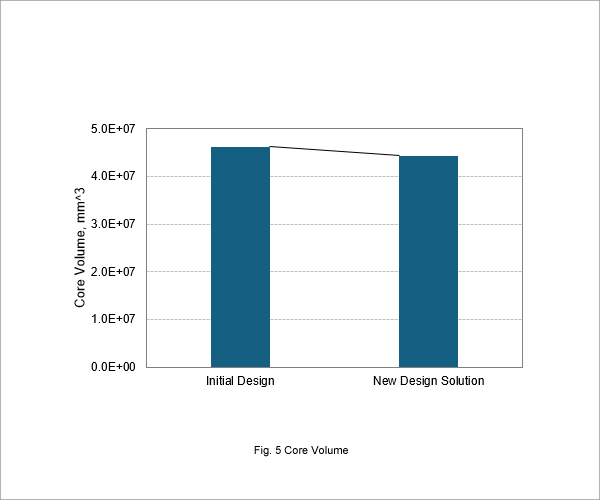
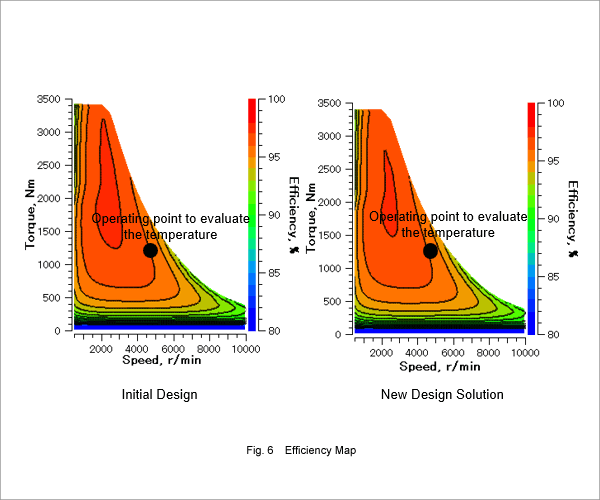
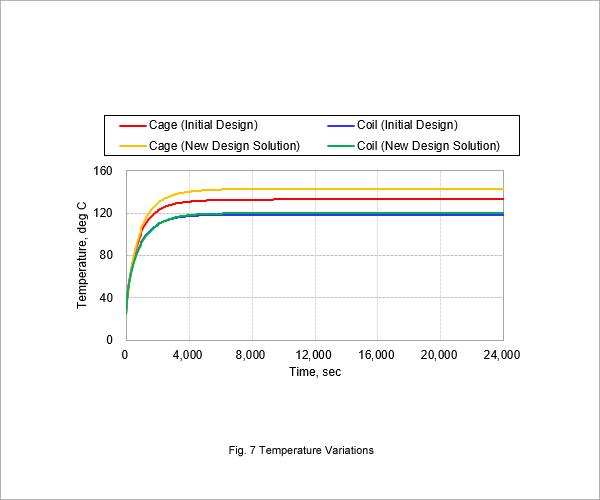
This section compares the initial design and new design solutions. Fig. 3 illustrates the motor geometry. Fig. 4 outlines the cooling fan airflow. Fig. 5 provides the core volume. Fig. 6 presents the efficiency maps and operating points to evaluate the temperature. Fig. 7 indicates the temperature changes of parts.
As illustrated by Fig. 3, the new design solution positions a higher number of stator vent ducts than the initial design closer to the coil. The diameter of both the stator and rotor vent ducts are also larger. These design changes maximize the cooling effect while minimizing the volume of the core cross-section. As outlined in Fig. 4 and Fig. 5, these modifications enable the new design solution to reduce the cooling fan airflow and core volume compared to the initial design. We can also expect these design changes to not only lower cooling fan costs but also reduce motor weight.
As outlined by Fig. 6 and Fig. 7, both designs satisfy the maximum torque and temperature requirements.