
Overview
In electrical equipment design, optimization calculation is used as a method to efficiently derive the optimal design that meets the required performance. Since it is important to thoroughly explore the design space to obtain the optimal solution, the computational complexity required is considerable. With a multi-core Windows machine, you can also work on such optimization calculations.
This case study uses optimization calculations for the design of an outer rotor type SPM motor for drones. We seek new designs that maintain average torque while minimizing magnet volume, torque ripple rate, and losses. To explore and obtain optimal solutions for 9 design variables in CAD parameters, calculations were conducted for 4,896 cases. As a result, optimal designs have been obtained that significantly reduce torque ripple rates and losses. By running 32 cases simultaneously, we were able to obtain the optimal design proposal within a realistic calculation time, such as one night.
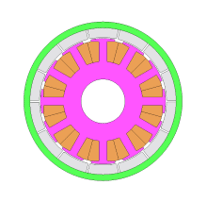
Optimization parameters
| Method | Multi-Objective Genetic Algorithm |
| Generations | 50 |
| Population size | 96 |
| Design variables | CAD parameter: 9 |
Fig.1 Target and optimization parameters
CAD parameters were optimized for the outer rotor SPM motor. As a prerequisite, the outer diameter and thickness are fixed, and the design variables are set at 9 CAD parameters for the rotor and stator. The number of generations was set to about five times the design variable, and the population size was set to about ten times the number of design variables.
You need to sign in as a Regular JMAG Software User (paid user) or JMAG WEB MEMBER (free membership).
By registering as a JMAG WEB MEMBER, you can browse technical materials and other member-only contents for free.
If you are not registered, click the “Create an Account” button.
Create an Account Sign in