Overview
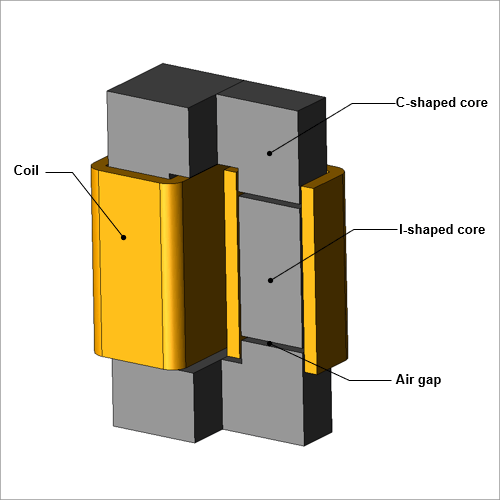
To find designs that balance multiple competing requirements, the optimization calculation is effective. It enables the simultaneous optimization of device geometry and materials. Furthermore, by combining it with multi-physics analyses, it is possible to explore optimal designs evaluating not only magnetic characteristics but also temperature.
This case study to optimize the dimensions of a DC reactor geometry, the number of turns and core materials simultaneously for minimizing both the maximum temperature and volume is introduced.
Optimization Conditions
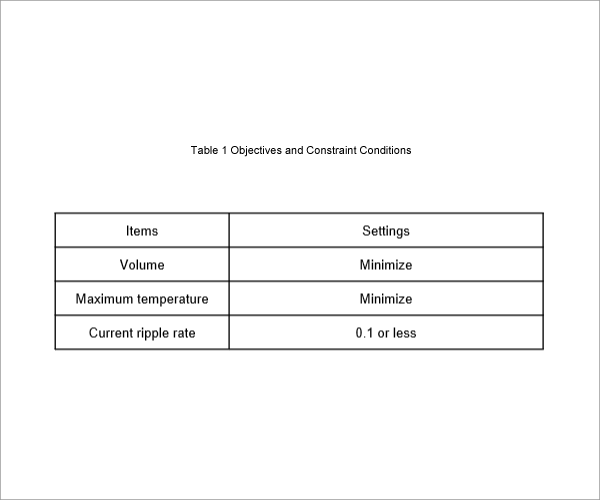
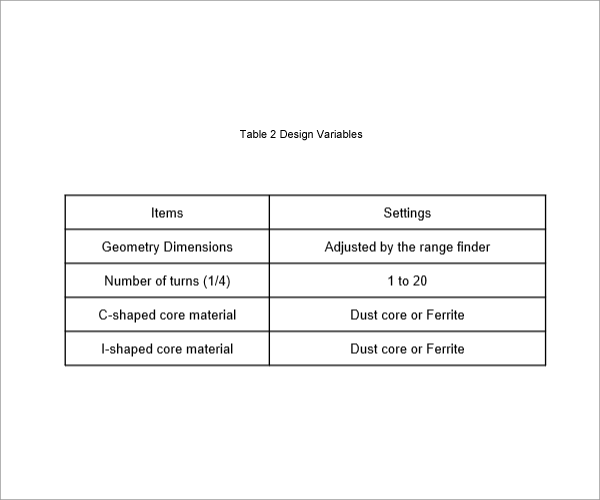
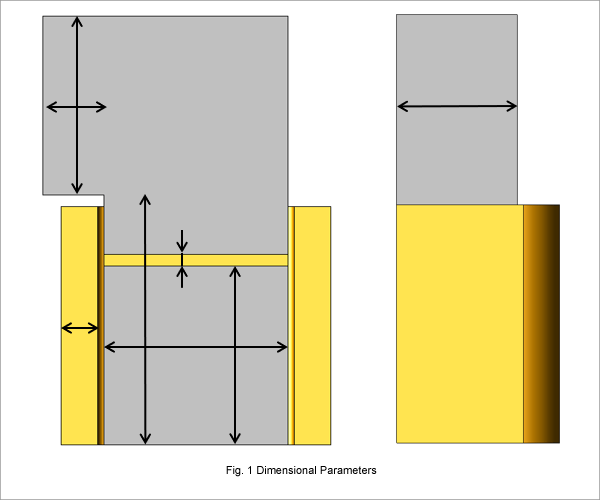
The objectives and constraint conditions are outlined in Table 1, the design variables in Table 2, and the dimensional parameters in Fig. 1.
Optimization Results
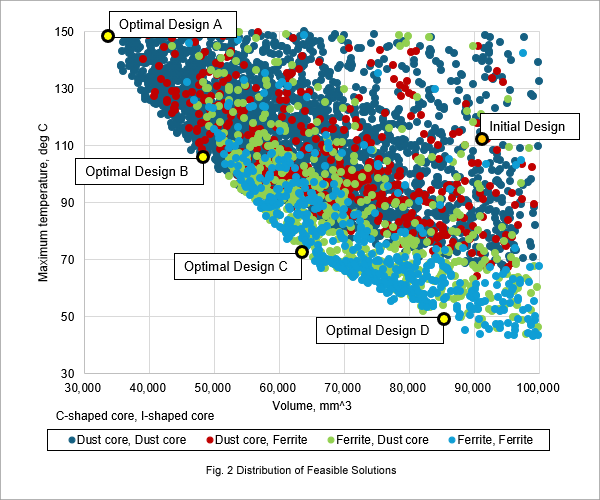
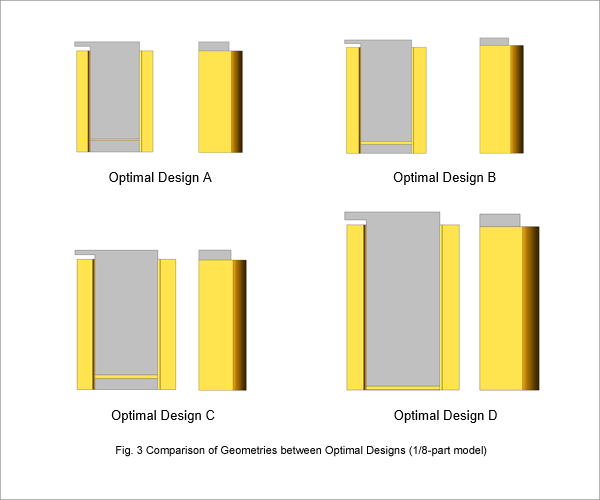
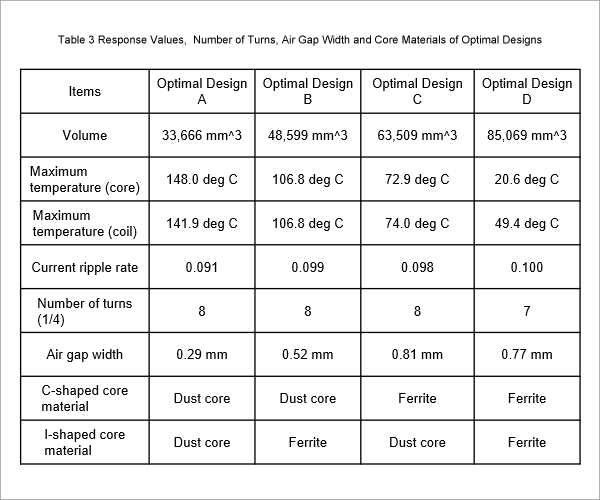
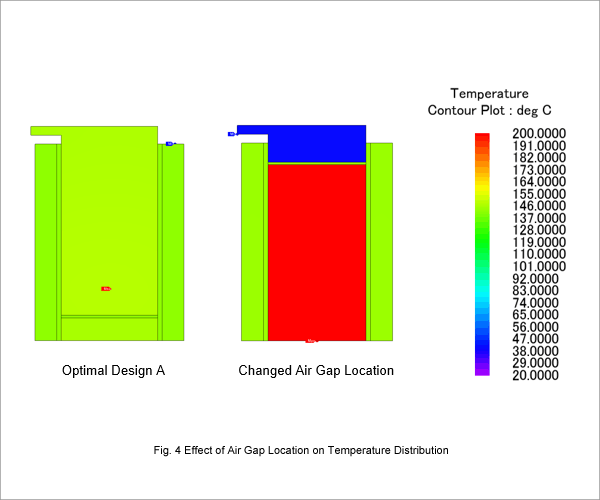
Fig. 2 shows the distribution of feasible solutions that satisfy all constraint conditions. Among them, geometries of four selected optimal designs are illustrated in Fig. 3, and their response values, number of turns, air gap width, and core materials are listed in Table 3. Fig. 4 shows the effect of the air gap location on the temperature distribution.
As illustrated in Fig. 2, it is found that there is a trade-off relationship between the volume and maximum temperature. When dust core material is used for all the core parts, the optimal design with the smallest volume is obtained, but the maximum temperature gets higher. Conversely, when all the core parts are made of ferrite, the lowest maximum temperature is achieved. However, compared to the case using dust core, designs with small volume cannot be obtained.
As seen in Fig. 3, it is evident that all four optimal design candidates with different objective function values achieve miniaturization by reducing the height of the C-shaped core and thickness.
It can be seen in Table 3 that the optimal designs using ferrite have larger air gap width. Since the saturation flux density of ferrite is lower than dust core, such larger air gap is needed to avoid the magnetic saturation.
As shown in Fig. 4, moving the air gap outward significantly increases the temperature of the I-shaped core. It turns out that the air gap is located closer to the center in the optimal designs, resulting in a shorter I-shaped core to reduce the core temperature.